I want my garage doors to look like these!
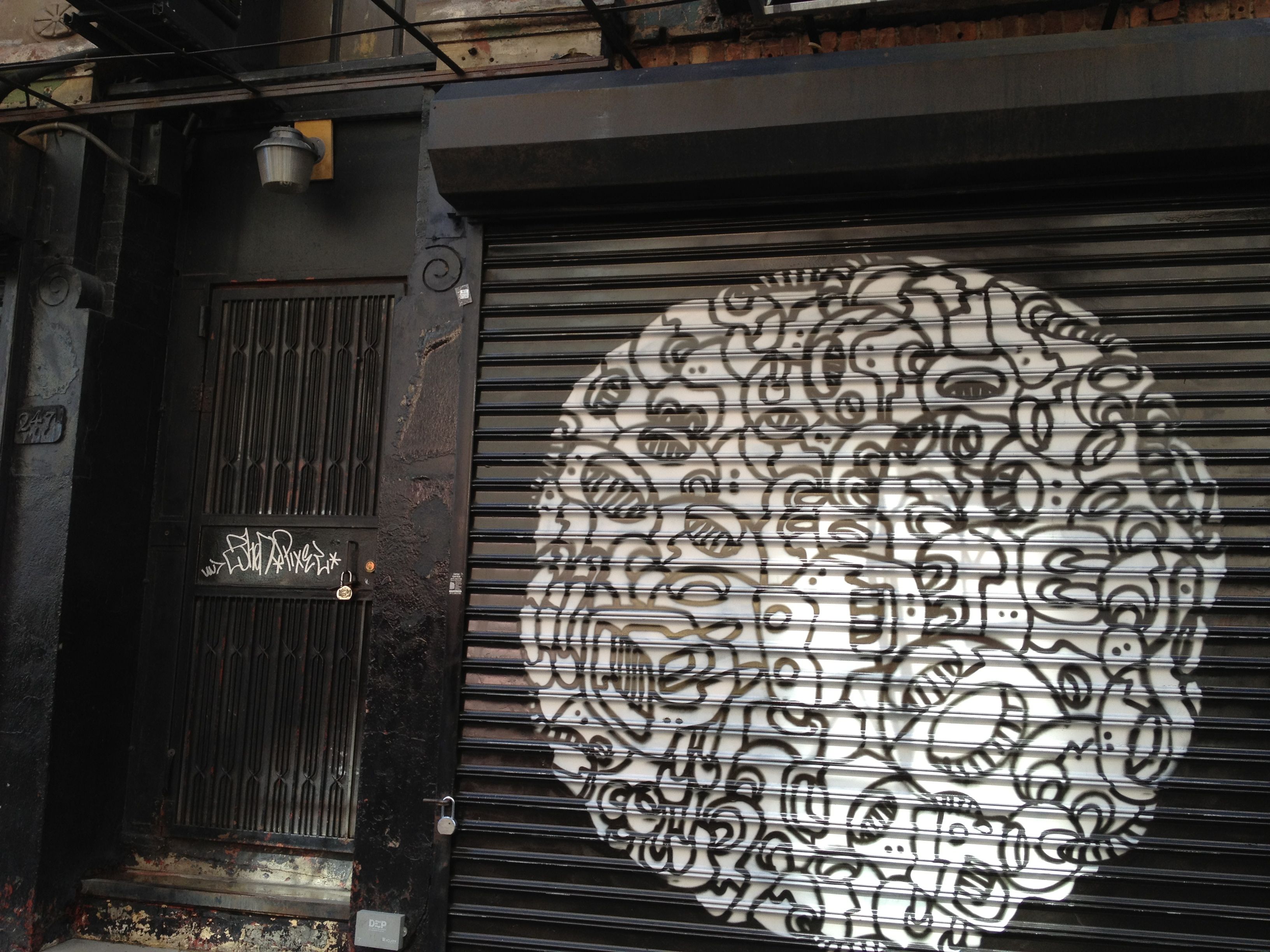
Lower Manhattan – left door

September 2012 – right door
(Posted as part of the Weekly Photo Challenge.)
I want my garage doors to look like these!
Lower Manhattan – left door
September 2012 – right door
(Posted as part of the Weekly Photo Challenge.)
(Today’s Daily Prompt says: write a letter to your least favorite trait.)
Dear Anticipatory Hysteria,
We’ve been together so many years and we will both have to adjust to life apart. But there is no question – it is time for you to go. I remember when you first came around. I was a teenager and noticed that nothing I ever thought would happen, did happen. So I began to imagine terrible things, because if I thought of them then they wouldn’t happen – a mental talisman. But the strategy never really helped. The terrible imaginings didn’t prepare me for other bad things that happened instead. Rather, they cost me so much time, energy and peace of mind — and kept me absorbed in misery that never materialized.
My new strategy is to note that I will have plenty of time to feel bad about something after it actually happens, and in the meantime I will do my best to keep my thoughts in the present tense, and to focus on all the positives, including the fragrance of the jasmine and the sounds of birds greeting the morning, as I write this on my front patio.
From now on I will save my apocalyptic imagination for my novels. There it serves me very well and has proved invaluable as I write my fantasy detective series.
P.S. Wherever you go next, please make room for your parents, Worry and Anxiety. Their eviction is in the works now.
Elmore Leonard published the novel Pagan Babies back in 2000 but I just read it this week. It is an Elmore Leonard book, therefore the plot is full of cons and double crosses, the dialog is witty, the prose is terse, and the characters are gritty and lively – oddball yet believable. In this book, Father Terry leaves Detroit half a step ahead of the law to become a rural priest in Rwanda during the recent genocide. During his first mass, some forty souls are slaughtered in front of him where they have sought sanctuary. After five years, Dunn returns to Detroit and gets caught up in the schemes of local mobsters and with Debbie, an aspiring stand-up comic who just got out of prison for hitting her ex-boyfriend with her car. The ex-boyfriend conned her out of $67 grand and she hatches a succession of schemes to get payback.
On LibraryThing and Goodreads I gave this book 4 stars. It probably only merits 3 stars. Consider the fourth a gratitude star. I can always depend on a Leonard novel to be worth reading.
I really needed a good read after having just forced my way through Quinn by Iris Johansen. My first and last Johansen. The writing was flabby and weak. All the dialogue sounded just like the narration and I hated the narration. The characters were romance novel cliches crowbarred into a thriller format. And the plot. Oy, the plot. Sensual, fragile yet tough forensic artist Eve quests for decades to find out what happened to her missing daughter, aided by hunky FBI man and former Navy Seal Quinn. One suspect is her hunky ex-lover, former Army Ranger and father of the missing girl, who doesn’t know whether he killed the girl or not because sometimes his brain short-circuits thanks to torture by North Koreans. But he must be innocent because the daughter’s ghost appears to him as well as Quinn and Eve. Aaaaaaaaaaaa. I can’t say why I wasted the time to finish this (I skimmed the second half) except I knew it was a best seller and wanted to see why. I found no explanation. To restore my faith in book buyers, I tell myself that the other two books in this trilogy must be way better. You won’t get me to test that theory.
Johansen fans – I regret if I have offended you. Looking for a positive – we will never compete for her library books!
(This post comes from this Daily Prompt.)
Posting about the time religion wrang my doorbell reminded me of this (true) anecdote.
There was a woman who always cooked ham for holiday feasts, and as part of the preparations, she always cut both ends off the ham before she put it in the oven. This was how her mother had taught her. She believed it helped to get the seasonings absorbed.
After many years, her children began to question the method. Mom, why do you cut off the ends? It makes the ham dry out.
Suddenly she realized she didn’t know why. Later that day when her mother arrived for dinner, she inquired, and the reply taught her much about unquestioned assumptions. Oh that’s right I forgot we used to do that. We had to cut the ends because the pan we had back then was too short for the ham to fit.
Our recently departed cat Boink and our dog Shadow enjoying some couch time together.

Sun on the couch.
(Posted as part of the Weekly Photo Challenge.)
Incoming surf overtops a sinuous retaining wall.

East Beach, Santa Barbara, at sunset
(Posted as part of the Weekly Photo Challenge.)
Summer in Chicago. The sculpture is Cloud Gate by Anish Kapoor.
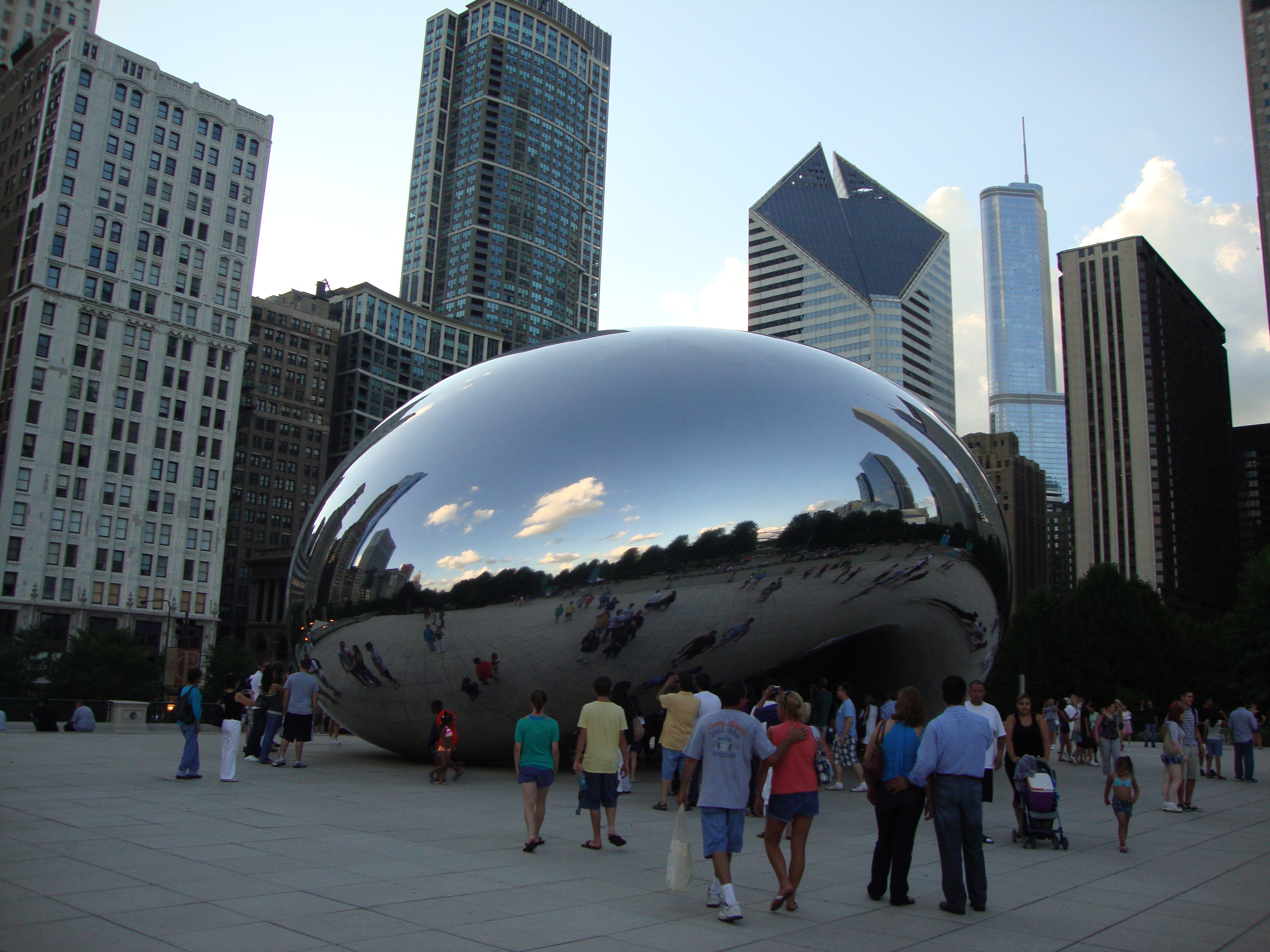
When you get close enough to this…
The same view, under scrutiny…
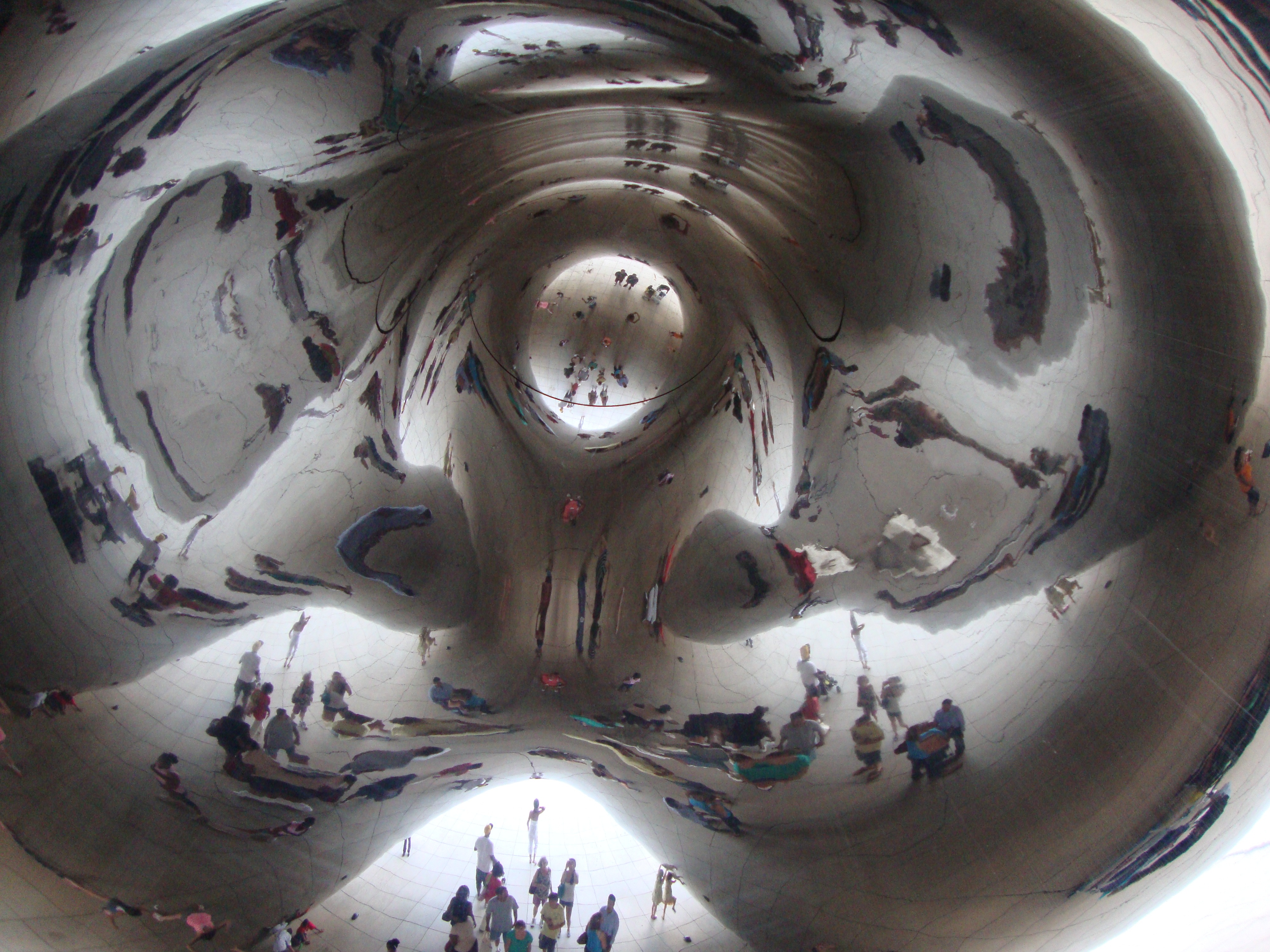
… it looks like this!
See me? I’m in the middle of the bright bottommost triangle, head titled to my right. To my left is a tall person with a camera. That’s my daughter, who took this spectacular shot.
(Posted as part of the Weekly Photo Challenge.)
 I have spent my adult life deeply agnostic and religion-avoidant, with two exceptions.
My first summer in college, I went through dark times, and at some point decided it would help if I had faith. I would intermittently pray, along the lines of God if you’re there I know I’m supposed to take you on faith but I can’t so if you could please just give me a sign, I will take it from there. One day, a few minutes after I finished such a prayer, the doorbell rang.
My favorite hike takes me through the chaparral-covered hills of Griffith Park but maintains a view (smog allowing) of downtown Los Angeles in the valley below. The weather and the seasons change but from this distance the city looks constant.

A fall afternoon.

Moonset at sunrise.

Early spring wildflowers.
(Posted as part of the Weekly Photo Challenge.)

Marlowe was at his finest in this book.
Detective Philip Marlowe is the person of this or any year, but don’t give him the award. He’ll be a no show at the ceremony and not just because he’s a work of fiction.
Of all the characters I have met and loved in novels, Marlowe is my favorite. I recently re-read his seven novels and found them as fresh and relevant as they were when I last read them, decades ago.
Marlowe has an unswervable moral code. He makes mistakes, he has doubts, but he always knows what’s right and acts accordingly. His morality is personally customized. It may not jive with law or mores but when there’s a discrepancy, Marlowe’s right.
Marlowe despises phonies and looks out for underdogs. He’s smart but he mostly operates on instinct. He’s often alone and frequently lonely. He’ll never be rich and he doesn’t care because wealth costs honor. Not that he’d ever put it like that. He doesn’t go on about honor or loyalty or justice or dignity but he lives his life in ways that promote all four.
 Required Writing